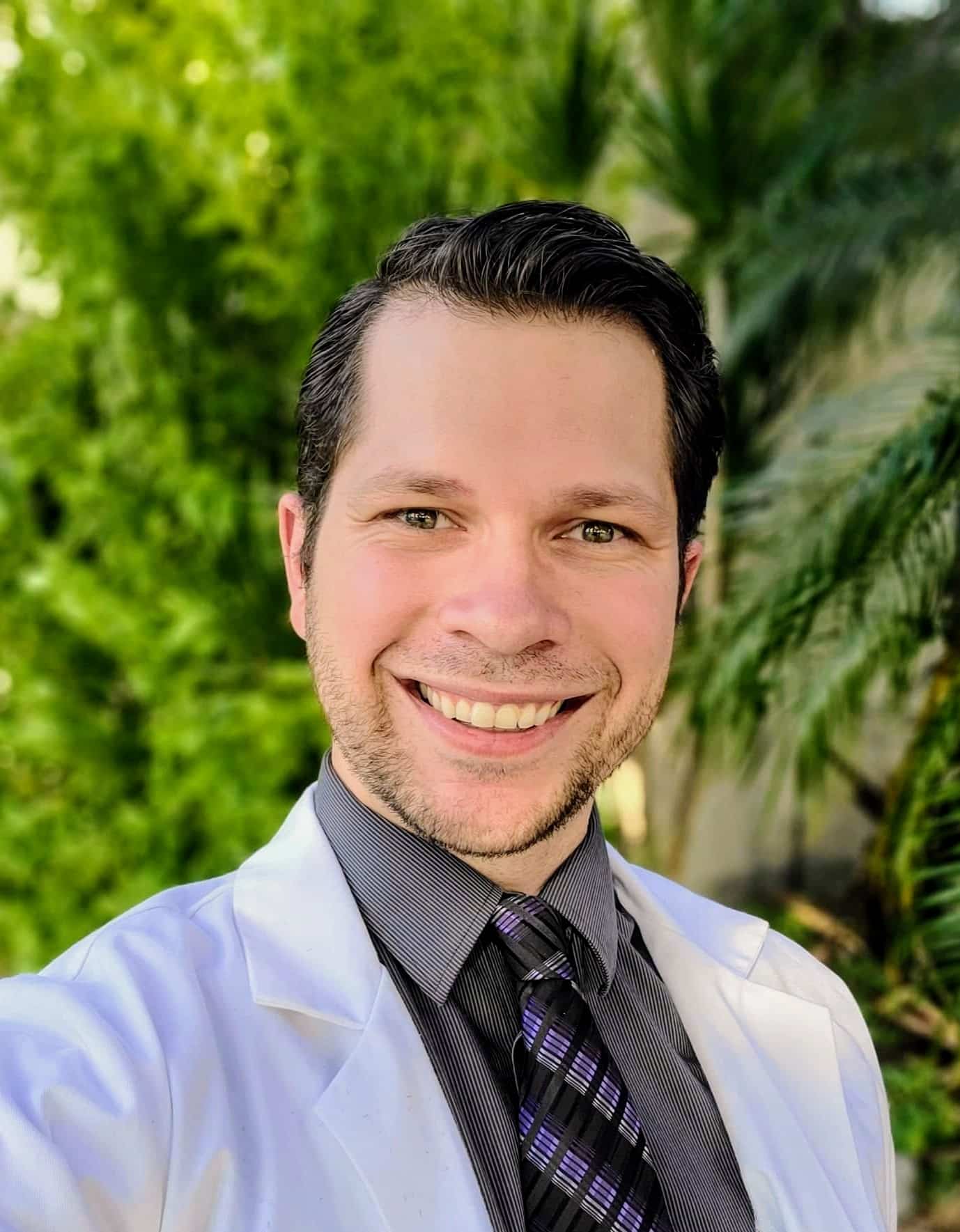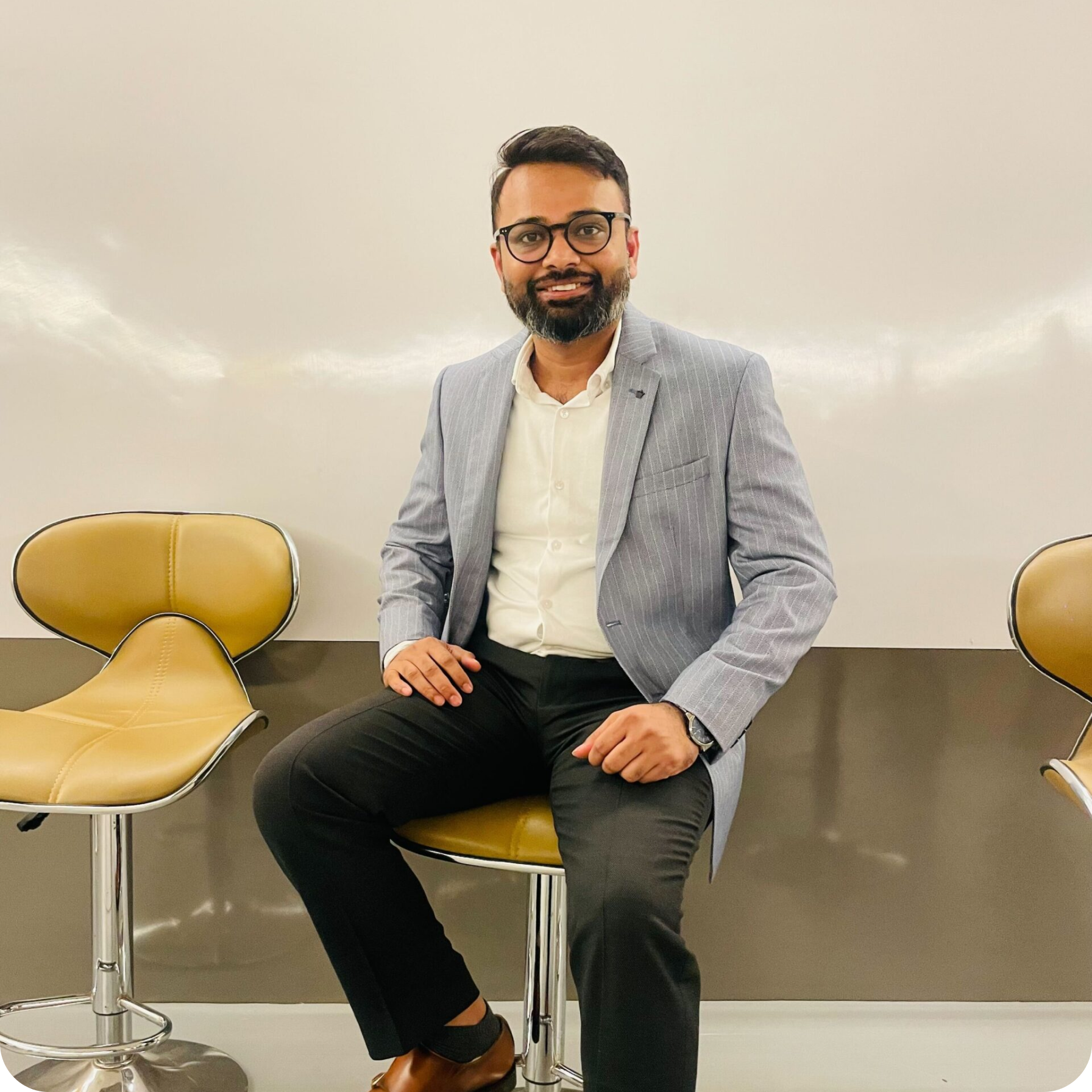



In this episode, host Rakesh Reddy sits down with Dr. Brandon Maijala, owner, foot and ankle surgeon at Care Podiatry. And Vice President of the Los Angeles County Podiatric Medical Association (South Bay), to explore how modern podiatry practices can grow without losing their community-first roots.
The conversation moves beyond clinical excellence into the operational and strategic realities of running a successful practice. Dr. Maijala shares how intentional patient experience design, thoughtful adoption of technology, and strong organizational systems have shaped Care Podiatry into a patient-centered, scalable practice in Anaheim.
From post-operative care innovation to clinic workflow design and early adoption of outcome-driven technology, this episode offers a practical look at how physicians can blend medicine, leadership, and entrepreneurship while staying focused on patient care.
Patient experience is a strategic advantage, not an afterthought
Community-based care can coexist with sustainable practice growth
Delegation and organizational systems free physicians to focus on clinical care
Small operational changes can significantly reduce patient stress
Post-operative care design improves outcomes and patient satisfaction
Technology adoption should always align with clinical outcomes and ROI
Leadership requires caring for staff and self, not just patients
Consistency in care matters across diverse patient populations
Research-driven innovation builds long-term practice stability
Strong systems are essential when transitioning from clinician to owner
Podiatrists looking to grow a private practice without sacrificing patient care
Early-career doctors planning to open or refine their first clinic
Physician-owners seeking better systems, delegation, and operational clarity
Doctors interested in improving patient experience without high overhead
Healthcare professionals balancing clinical excellence with business leadership
Practice owners evaluating technology adoption and long-term scalability
Rakesh Reddy:
Building a successful clinic takes more than great medicine. It takes vision and the courage to innovate. My guest today, Dr. Brandon Maijala. He is a respected foot and ankle surgeon and the Vice President of the Los Angeles County Podiatric Medical Association, South Bay.
In just a few years, he turned his Anaheim practice, Care Podiatry, into a model of modern patient care, healthcare, combining surgical expertise, community leadership, and technology, and the post-op box that he got for himself for the patient experience.
We are going to unpack his journey, how he balances medicine with entrepreneurship, and what it takes to build a thriving practice in today’s healthcare world. Dr. Maijala, welcome to Healthcare Business Growth Conversations.
Dr. Brandon Maijala:
Thank you, Rakesh.
Rakesh Reddy:
Yeah, I want to start from the top. Like, you have grown Care into a thriving practice, and Anaheim has become your anchor location. What was the vision when you started out?
Dr. Brandon Maijala:
When I started out, I wanted to really focus on patient care. I wanted to bring back care into healthcare. I noticed a growing shift and change into more less community-based doctors or patient-centered doctors and more into profits or corporation-based ideology.
So I knew I wanted to do a private practice, one that was focused on the communities where I live.
Rakesh Reddy:
Got it. That’s interesting. And then I love the way that you said you want to bring care into healthcare. That has a deep meaning. So, like, you know, a lot of doctors struggle to separate their clinical identity from their business role.
How do you balance being both a practicing surgeon and a business owner?
Dr. Brandon Maijala:
It’s difficult. It is a hard, it’s very hard task to do. Both of those take a lot of skill. But having a good team beside you, being very organized, and making sure that you take time for both of those things to make sure that your skills at both managing an office as well as managing your skills in surgery are attended to. It is something that you can.
Rakesh Reddy:
Yeah. Right. No, I think you focusing on the right team and setting up the right systems is the way to go. So, and you are also the Vice President of the Los Angeles County Podiatric Medical Association.
That’s North, right? Like, you know, I imagine being in that position gives you a bird’s-eye view of where podiatry as a profession is heading. Now, has that perspective influenced you, how you lead your own team in your practice?
Dr. Brandon Maijala:
It helps me stay connected with the profession and then connect more with my colleagues throughout California, especially at the sponsored events like the Western that’s happening once a year, and it’s a large trade show that I try and go to every year.
And also with delegation too, it helps me bring awareness to our profession, and then also it helps me help out our profession by potentially influencing future laws or things that can lead to reimbursements for our profession.
Rakesh Reddy:
Got it. So, like, you know, let’s talk something that really fascinated me, the post-op box. Now, I was really surprised, you know, whenever I heard it, and then when I looked at it. So, like, you know, where did that idea come from?
Dr. Brandon Maijala:
That came from when I was in residency. And as a resident, I worked under and I was being trained by a lot of different surgeons. And post-operative swelling is a big issue with any foot or ankle procedure that’s done.
Swelling is one of the most common side effects and can last the longest.
So a lot of my attendings would recommend different products and different things to help decrease the amount of postoperative inflammation and long-term swelling. I found the ones that I found were the best, and I curated the products, and I tested them myself, and I created a kit that people can then use after surgery.
Now that I’m out and doing my own surgeries, I give this to each of my patients just to help with the pain and swelling postoperatively. And it’s just a way that we can do a little bit more to help people be cared for and in less pain.
Rakesh Reddy:
Well, that’s brilliant. And what I like about it is how intentional it feels. It is not just a product. It’s a part of a patient experience strategy.
So I really liked that.
So, like, let’s say, you know, if I were to visit your Anaheim clinic tomorrow as a patient now, what would stand out? How do you create a strong patient experience at your clinic?
Dr. Brandon Maijala:
Well, as soon as, you know, we try to make it as easy and less stressful as we can for the patients. They’re already stressed because of whatever injury or ailment that they’re having. You know, if there’s check-ins available, we made mobile so that they can check in on their phone.
You can also check in right outside the clinic. We have a QR code. We have a very open waiting room so it doesn’t get too crowded. I don’t like people being crowded or waiting. So another thing is I only book 30-minute slots for each patient. I don’t, at this time, double-book anybody.
They all get their own time slot. That way that I can have that time for them and not have to go to another patient. We also, once you get in the room with me, I don’t bring in a computer.
I do have either somebody else there scribing or I have a tablet with either virtual scribe or a scribe recording so that I can focus on you, the patient, and talk to you one-on-one, and there’s nothing between you, me, and your issue.
Rakesh Reddy:
So that’s really care, right? Like, that’s your strategy. So just make sure nothing else is in between the patient and the doctor, just focusing on the care, as you said, in the healthcare.
That’s what you wanted to bring, and that’s what you’re preaching, and that’s what you’re doing. That’s impressive. And also, I noticed that you wrote a surgery and proprietary book.
That’s an impressive accomplishment. So did that process change how you communicate with your patient or staff?
Dr. Brandon Maijala:
That’s a good question. Writing is a whole different thing. Writing for other people is very different than writing for yourself. Whether you’re in medical school or residency, you write to help you learn and remember.
But when you’re writing for somebody else, you have to use language that will help your audience learn and remember. And that is a key thing that I think helped me with is that everyone hears things a different way.
Everyone remembers things through different ways. So it helped me more like a soft skill when talking to patients, realizing that I have to speak in a way that will get them to hear.
Rakesh Reddy:
Got it. So in a sense, writing forces clarity, and then that helps you think clearly. That’s really a good way. That’s an impressive accomplishment. So on the same line, for smaller single-doctor practices, what are the one or two low-cost ways they can elevate the patient experience?
Dr. Brandon Maijala:
That’s also a great question. I think one of the ways that we have used is using a virtual assistant. That takes a lot of the backend work that you would be doing instead of providing patient care off of you. It can help with telephones, insurances. It’s helped tremendously.
Rakesh Reddy:
Well, that’s gold. You know, like, you’re just delegating the work that you are not supposed to do, and then you put it like, you know, hiring a virtual assistant that also brings in that resource at the lowest cost possible, and in turn that helps you to care for the patient, and eventually you are creating that patient trust, giving them the comfort.
And you know, I think, you know, this is all like, you know, you’re creating that invisible marketing for your brand by following this, and it follows the word-of-mouth referrals as well. That’s really gold.
That’s a good advice that you have given.
Rakesh Reddy:
So, like, Anaheim, right, the location. I just wanted to ask about the location because it is such an interesting city. You know, very active, young, fast-paced.
I was just searching about Anaheim as a location, and then I just wanted to understand much more because now you are running the community. You know, you have got families, you have got professionals, athletes, now all with different needs, right?
So how do you keep your care consistent while adapting to such a dynamic patient base?
Dr. Brandon Maijala:
I think one of the ways, it is very dynamic, and it’s a very large city. I have to specifically tell patients where I’m at in the city of Anaheim because it’s big. I think treating everybody with the same amount of care is the goal.
You never know what kind of patient it’s going to be or what kind of encounter it’s going to be with them. You’ll think this person is going to be a really great patient, and they come in and they’re difficult, or you think someone’s going to be difficult and they end up being the best patient of the day.
So trying to treat everybody as if they’re going to be the best patient of the day, or that you’re going to be the best doctor for them, usually helps me with that dynamic population.
Rakesh Reddy:
I love that you mentioned you want to be the best doctor for your patient. So that’s a perfect setup where I want to go into next because your clinic seems to adapt innovation early, especially when it aligns with patient outcomes. You recently introduced some cutting-edge technologies. So I just want you to talk about it and also what convinced you that that was the right next step for your practice.
Dr. Brandon Maijala:
There’s a few things that we have that we use lasers for photobiomodulation tissues to help increase healing with things like skin fungus, toenail fungus.
That’s been around for a while. I’ve used lasers for toenail fungus. I think the first time I was introduced to that was maybe four years ago, and it showed great results.
We’re currently evolving with that and using different ways of doing photobiomodulation. We also want to be a one-stop place. I don’t want to be a primary care doctor, but it seems like our clinic tends to go that way.
We treat more than just toes. We have vascular studies, nerve condition studies. We’re doing more systems in and around the ankle now.
Rakesh Reddy:
That makes sense from the care point of view. But I imagine a lot of doctors listening are cautious about adopting new tech because of investment or uncertainty. So how do you evaluate the ROI?
Dr. Brandon Maijala:
I don’t want to adapt anything that I haven’t personally tried or seen or that hasn’t been documented for decades. I go to trade shows, I hear testimonials, I do trials. You research first.
Once you find something that helps your patients, you research how to make it a net positive for the business. If it’s a net negative, you won’t be in business.
Rakesh Reddy:
That’s a very strategic way of thinking. Not technology for the sake of it, but as part of the patient journey.
Rakesh Reddy:
When you look ahead two to three years, what do you think will define successful podiatric clinics?
Dr. Brandon Maijala:
The scope of practice varies by state. But if you can own your practice, stay afloat, offer more services, and be the doctor you want to be, that’s success.
Rakesh Reddy:
With increased competition and doctors running single-location clinics, what should they pay attention to?
Dr. Brandon Maijala:
They should pay attention to patient demographics. There are areas where it’s not feasible to open a practice. You have to research the population before opening.
Rakesh Reddy:
What is the one mindset shift that changed how you run your clinic?
Dr. Brandon Maijala:
You have to take care of yourself and your staff more than before. Ownership adds responsibilities you didn’t have before.
Rakesh Reddy:
What is the best investment you have made, not in terms of equipment, but something that changed your business?
Dr. Brandon Maijala:
I think it’s between Orange Carrot Media and the virtual assistant. Both of those have really offloaded a lot of work that I would do that didn’t lead directly to patient care.
Rakesh Reddy:
I’m glad to hear that.
Dr. Brandon Maijala:
I’m being honest. It’s hard for me to focus if I’m not focused on the patient.
Rakesh Reddy:
What common mistakes do you see new podiatrists make when starting their own clinic?
Dr. Brandon Maijala:
Not being organized. Organization is not taught in medicine. Clinical thinking is linear. Running an organization is branching. You have to think differently.
Rakesh Reddy:
The first moment of truth is the front desk. How do you think about that experience?
Dr. Brandon Maijala:
The word care is everywhere in our clinic. I tell everyone to care about patients when they come in.
Rakesh Reddy:
One piece of advice you would give your younger self?
Dr. Brandon Maijala:
Keep going. You’ll get there.
Rakesh Reddy:
Thank you for your valuable time. This is not just for podiatrists. It’s for anyone building a healthcare brand with purpose. Thanks again for joining Healthcare Business Growth Conversations.
Dr. Brandon Maijala:
Thank you.
Dr. Brandon Maijala, DPM, is a foot and ankle surgeon and Founder of Care Podiatry in Anaheim, California, where he focuses on delivering patient-centered, community-based care. He also serves as Vice President of the Los Angeles County Podiatric Medical Association (South Bay), contributing to professional advocacy and leadership within podiatry.
With a strong emphasis on surgical excellence, practice innovation, and operational efficiency, Dr. Maijala has built a modern podiatry practice that integrates thoughtful patient experience design with evidence-based technology. He is recognized for his commitment to advancing care delivery while maintaining the personal connection central to private practice medicine.
Rakesh Reddy discovered his passion for marketing while pursuing his MBA at Lynn University, which led to a pivotal internship at Allergan and early experience in healthcare-focused marketing.
In 2019, he teamed up with Austin to launch Orange Carrot Media, and since then has focused on building performance-driven systems that help medical practices grow through digital.
From 2019 to 2025, Rakesh has led operations and delivery, speaking at healthcare and MSME events while scaling Orange Carrot Media’s presence across the U.S. and India.
Download FREE Podiatry Marketing Plan Template