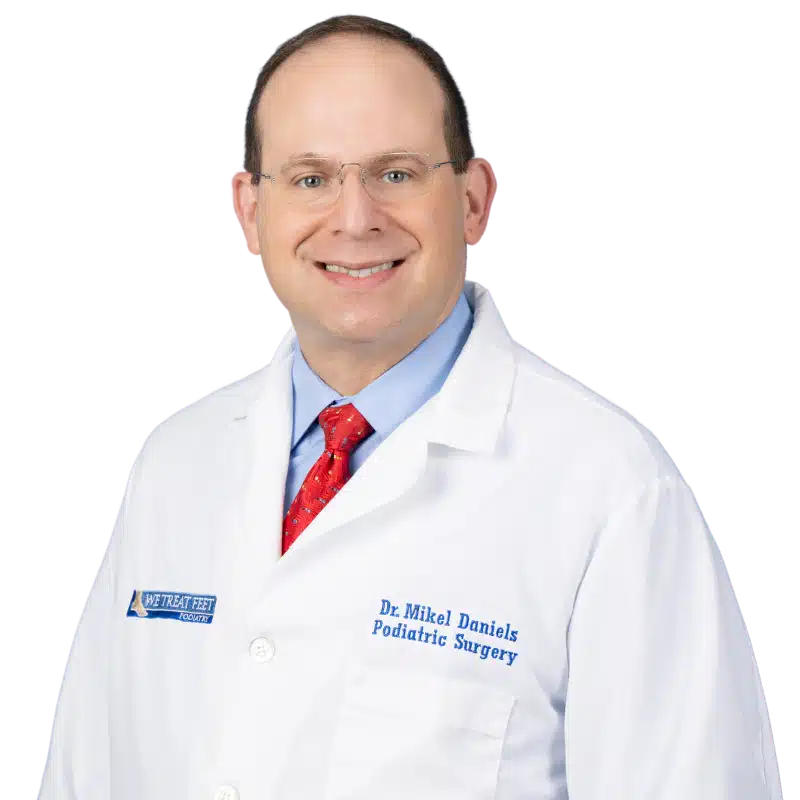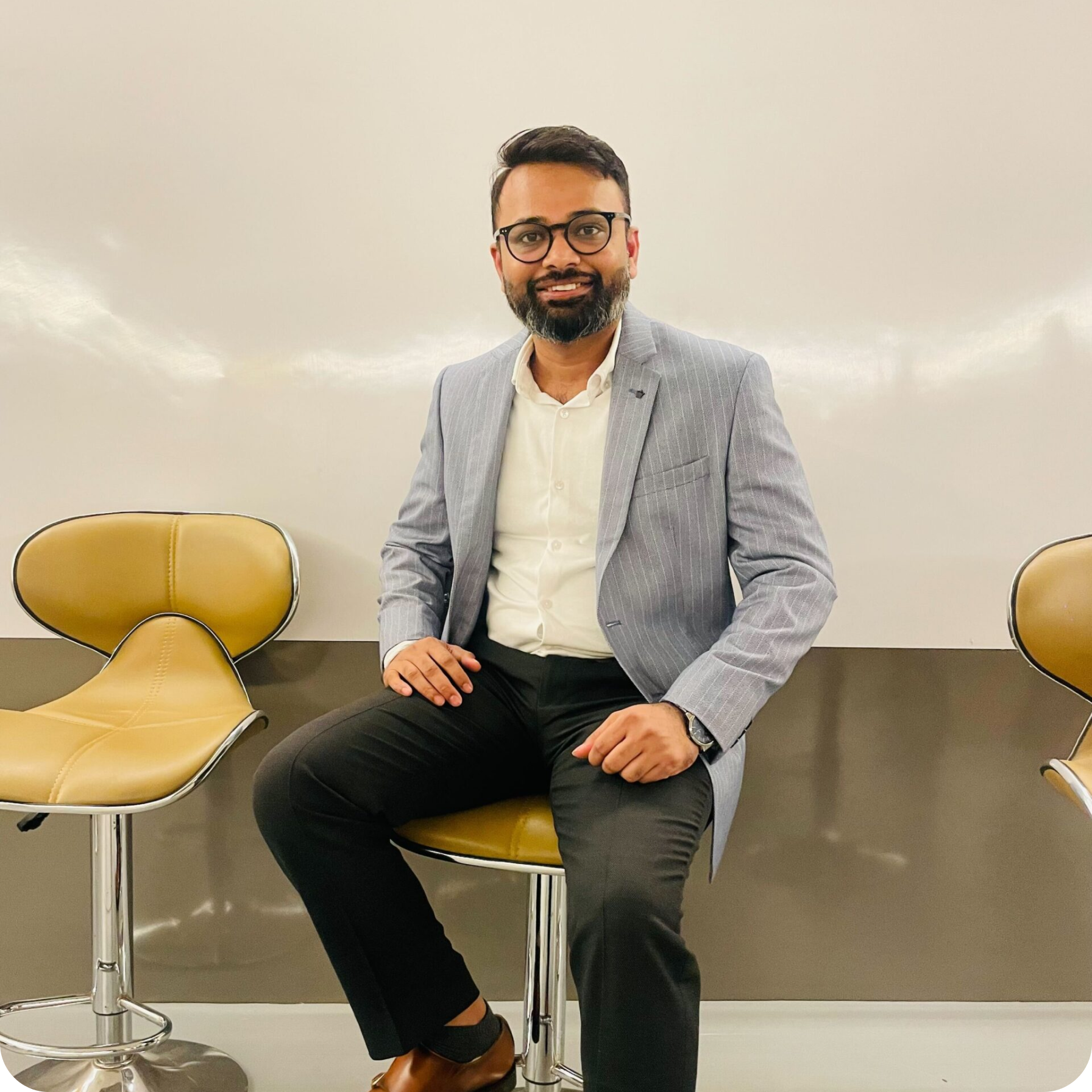



In this episode, host Rakesh Reddy sits down with Dr. Mikel Daniels, of WeTreatFeetPodiatry. A podiatrist and healthcare executive, to unpack what it really means for physicians to move beyond clinical practice into leadership, management, and strategic growth.
The conversation explores how medical professionals can develop a business mindset without losing their clinical identity, the operational realities of running and scaling healthcare organizations, and the strategic thinking required for mergers and acquisitions. Drawing from real-world experience, this episode offers a grounded perspective on leadership, sustainability, and long-term value creation in healthcare.
Rather than focusing on theory, the discussion dives into practical challenges such as operational complexity, delegation, hiring, financial discipline, and systemization that physician-owners face as they grow from solo practitioners into healthcare leaders.
Rakesh (Host):
Welcome to Healthcare Business Growth Conversations. I’m your host, Rakesh, and today I’m joined by Dr. Mikel Daniels, a physician who made the unique leap from the exam room to the boardroom. He currently serves as president, CMO, and managing member at We Treat Feet Podiatry, a multi-location practice with clinics across Pennsylvania, Maryland, and Washington, DC. With both a medical degree and an MBA, Dr. Daniels has been on the front lines of clinical care and now leads on the business side through managing clinics and driving mergers and acquisitions.
In this conversation, we will explore his journey, the lessons he’s learned in leadership, and his perspective on the future of healthcare management. Whether you are a clinician, an executive, or simply fascinated by the intersection of medicine and management, this episode is for you.
Welcome. It’s a pleasure to have you on the show. And I want to thank you for accepting and now to appear as a first guest in our show. Thank you and welcome.
Dr. Mikel Daniels:
Thank you, Rakesh, for having me. And I guess that proves you have no place to go but up.
Rakesh:
Yeah, yeah. So the first thing when I met with you, you know, I was not fascinated by your clinic side or now the way you are doing business. The one thing that got my attention was your MBA degree. So I just wanted to understand, what inspired you to get an MBA? Did you get it before getting into the management side or what is the story behind that?
Dr. Daniels:
Well, I mean, it’s kind of a development that happened over time. So I started here in my current practice in 2002 when I finished residency and I had a senior doctor who’d been here for about 30 years by himself. And two years later, I was making more money than he was, so I took a pay cut and became a partner. And two years after that, I bought him out and it started to grow.
So right around 2008, 2009, when we hit for the first time a million dollars in revenue, I started to think, wow, I don’t really know what I’m doing here because, you know, I got no business training in graduate school. I was an economics minor in college. So if you want to talk about isoquants or Laffer curves, I’m your guy, but that doesn’t help you much in business.
So I decided that I needed more education. So I went and enrolled in an online MBA program because I had to do it while I was still working. And I finished that in 2014. And when I got done with that, I took another look and I realized, wow, I really don’t know what I’m doing. Because I wrote my capstone project on my own practice. So, you know, and I kind of started to build from there.
It’s unique in the sense that it’s like speaking two languages. You know, when you go to a hospital these days as a staff member, everybody runs the hospital, all the admin people, they’re basically all business people. Whereas when I trained 25 years ago, the hospitals were run by doctors and the doctors were the people who were the chief executives. You know, there was a finance guy who was a business guy, but, you know, he was almost like the token guy in the boardroom, ’cause everybody in there pretty much were docs.
So now you go in and you see that you have these two, and I think warring factions is probably accurate to say, where you have the doctors who care about the patient care and then, you know, really care about themselves at the end of the day ’cause again, nobody’s working for free, right? So, and then you have the hospital business people who don’t understand what caring for patients really means and are bottom-line oriented because their jobs depend on it.
So when you go into meetings and these two people are clashing and they’re clashing because they’re not even saying the same thing or arguing about the same thing, it becomes kind of funny to sit there and smirk to yourself about how they can’t see the other side because they’re not talking about the same thing. And that’s where I think this kind of comes in handy. Plus, it gets me some street cred and I got nice letters after my name on my e-mail signature. So it’s all the fun perks of that sort of stuff. And as you pointed out, you were interested in it. So clearly, it’s an interesting point of discussion to bring into focus whenever I have these conversations.
Rakesh:
Yeah, that was the one thing that stood out. I’m like, okay, wow. I’ve never seen a physician with an MBA degree. And a physician at your stature, you’re well established and then you got an MBA. And then I was like, oh, wow. Like, you know, I was a little bit on my toes when I was talking with you during our early days of conversations. And when I put up a, I think a sheet, Google sheet with all the numbers, you just glanced and then you got the story behind those numbers just within few seconds. And I was not only surprised, but I was happy because it would be a challenge, challenging working with you and also it would be fun working with you. So that’s why—
Dr. Daniels:
I’m sorry, I was gonna say, you know, from business school that if you can’t put it on a spreadsheet, you can’t discuss it.
Rakesh:
Definitely. So like, you know, while you’re transitioning, right, like, you know, from just from the physician, maybe whenever you decided to get your MBA, did you face any skepticism either from maybe a self-doubt or skepticism from peers? How did it go at that phase for you?
Dr. Daniels:
So I had a lot of self-doubt, you know, as I said, I was a full-time working physician and the program I did was competency-based. I would come home every day after work and sit at my computer and basically write for an hour or two. Then I’d spend four to six hours on Saturday and Sunday writing to get this thing done because that’s all you did. That was a good way for me to learn because I learn by repetition and writing. I actually got a lot out of it.
I was so skeptical of my ability to do it and to finish the program that I didn’t tell my wife until I actually enrolled, and I wouldn’t let her tell anybody, including our kids. Because I wanted to make sure that I wasn’t going to give up and quit in the middle. It’s not usually my personality, but it is with skepticism on my part.
For the most part, I actually really ended up enjoying the program. It was really kind of neat. I have a liberal arts degree from my undergrad, so the one thing they taught me how to do was they taught me how to write, so I could sit there and write. It’d be funny when you’d see examples of projects and people would have two or three pages, and mine was 14. If you’re going to do it, you might as well overdo it kind of thing.
When I didn’t really discuss doing it with my peers, I had a few very close friends who knew. Not all my friends do. And I think more after when people found out, it was kind of a… Again, it’s an impressive thing that people think of, which I didn’t do it to impress anybody. I did it because I wanted to know what was going on and I wanted to be able to grow my business in a responsible way.
But yeah, people today look at it and it does get me a little bit of—little higher level. I think people speak to you on a different level. We have the same thing with patients. You have to explain medical concepts to people who are not medically trained, and you want to do it in a way they understand without insulting them. And it’s kind of the same thing in the business world when you talk to non-business-related people.
You know as well as I do is you start talking about quick ratios and net present values, and people are like, huh, what? I don’t know what that is. Even some MBAs don’t know what that is these days. But again, I think all of school, for the most part, is basically just learning the vocabulary. Some vocabularies are more difficult than others. But once you kind of understand, it makes a little bit of sense. And this kind of will gel eventually into the private equity conversation that I think we’re going to talk about.
Rakesh:
Yeah, yeah, definitely. Looking back, what skills from being a physician helped you the most in your business journey so far?
Dr. Daniels:
Well, I think the idea—the idea of being able to get through professional school, for me it was podiatry school, taught me how to not only time manage, but budget and accomplish the most important tasks first. As I said, business school is easy because all I do was write. I mean, I wasn’t studying for tests or doing anything like that. So it was really easy for me to sit down because I could do it as much or as little as I wanted on a given day. And occasionally I took a day off. I couldn’t have done that if I was in one where it was exams.
I think being able to do it this way is really kind of what propelled me forward. And again, every once in a while I sit around thinking, I should go get a degree in finance, but get too old for that.
Rakesh:
Got it. So right now we are building and managing clinics. So now I just want to know the lessons from the ground in operations, right? Like whenever you sit in a boardroom and it is in the cloud, but whenever you just go onto the ground and then see the day-to-day management. So now from your perspective, what are the biggest challenges that you are facing in running a clinic beyond patient care?
Dr. Daniels:
So obviously the most significant, I think in any sort of medical business these days is, you know, our falling reimbursement and how even when we get small bumps, they don’t keep up with inflation. And we are estimated 75% down from where we were if we had been indexed for inflation since the eighties, as far as reimbursement for services.
So the hardest part about running a medical practice is that money is a dirty word in medicine. Nobody in medicine wants to talk about dollars when you’re a doctor. I often tease that the staff thinks there’s a tree out back and every payroll period, I go pick some money off and hand it to them and fail to understand that the patients are what pay them. And the services we provide for our patients are how we keep the lights on and how they feed their children.
But you got to be very, very careful because it starts to look like you are pushing for services that aren’t there when, or excuse me, aren’t needed when that’s not the case. The case is we need to make sure that we’re providing for our patients all of the things they need to remain healthy and stable. And in my case, since I primarily do wound care, to preserve limbs and lives.
And it takes a lot of multitasking and a lot of different products to be able to get it there. It’s not just as much as sitting in them, giving them advice and walking out the door, which we call an evaluation management visit. If you’re just doing that, you’re probably not only shortchanging the patient, but you’re also shortchanging the practice.
Rakesh:
Yeah, got it. So that’s what fascinates me, right? Like, you know, you’re still practicing while managing the clinics. So like, you know, can you share a decision and how that improved both patient care and the financial outcomes for you?
Dr. Daniels:
So we—what we’ve been doing, or my whole philosophy during practice has been to continue to bring into the practice different service lines of items that we had referred out. So, you know, the latest thing that we brought into our practice is, we’ve started to do compression garments for patients with lymphedema or venous insufficiency ulcerations. You know, before we used to just say, you know, go get ’em or here’s a script or go on Amazon or whatever.
And the problem is, patients couldn’t find them, patients couldn’t afford them. There are huge compliance issues. So we brought that in, which generates dollars for the practice and is really helping our patients because now we know they’re getting the right things and we’re going over with them how to wear them, and we’re making sure they understand. And it’s really kind of improving patient care while it’s also had a positive effect on our bottom line.
Rakesh:
That’s an excellent thing to do. So yeah, on the same line, whenever if you see it from the clinical side, now you think of excellence, how can you achieve the excellence on the clinical side? But on the financial side, definitely, as you said, now we got to find the sustainability first. So how do you balance between the clinical excellence and financial sustainability in a day-to-day decision?
Dr. Daniels:
Well, I mean, clinical excellence comes first. I mean, there’s no ands, ifs, or buts about it. If we don’t take care of patients in an appropriate way, then there won’t be any financial stuff to take care of. Aside from the fact that it’s a moral obligation on our part to do it, clinical excellence, patient care always comes first.
I tell the new doctors is provide for the patient, take care for the patient, and then we’ll figure out how to make money off of it. Because again, you can’t make money off of people who aren’t here. So you got to take care of them or we got to close the doors. That being said is we want to make sure we’re doing this in a cost-effective manner and we’re being good stewards with the reimbursements that we’re billing for.
Rakesh:
So, since on the operational side and then now you’re taking it on the clinical side, so now if you had to give one operational principle every clinic leader should follow, what would it be?
Dr. Daniels:
So, when it comes to operational… operational excellence. I always say, you know, you have to make sure that you have the right people because you just can’t teach nice. You can teach people what to say on a phone. You can teach people how to file something. You can teach people how to operate. You can’t teach nice.
If you don’t have nice people, you’re going to fail. Nobody wants to be barked at. And if you have somebody who brings their home life to the office or wears their heart on their shoulder, that’s a problem. Because at the end of the day, we’re here to help people. But by the same token is we’re here to save limbs and lives. So if nobody’s here, we can’t do that. And it’s really that simple. You just can’t teach nice. So you got to hire it.
Rakesh:
That would be a great—a great suggestion on the operational side. Now, that’s a great thing. I think you got enough of building and managing the clinics every day while working as a physician. That’s a great thing.
So I also know that now you’re expanding. When we started working with you, I believe, you know, you got like two or three locations and then now you are into 13, 14 locations and then a few of them are mergers and acquisitions. And I was surprised whenever I saw when you got into the M&A side of the business.
So I just want to talk quickly about it. So what drew into the M&A side of the healthcare? Was it a strategic move or did it just the opportunities unfold for you?
Dr. Daniels:
I would say hubris is probably what dragged me there, you know, thinking that I could build a better mousetrap than everybody else and, you know, trying to kind of go for it and prove my thesis. You know, it’s, it’s, it’s not easy. It is very, very, very difficult to hire and or replace physicians.
You know, if you’re an accountant, okay, you can go and you can work in another state waiting to take the CPA exam. If you’re a lawyer, you know, you can work in a law firm, you know, doing legal stuff without having passed the bar while you’re waiting to pass the bar. In medicine, you have to be licensed by the state and then credentialed by insurance before you can actually make a living. So we can’t just hire somebody off the street and get them to start a week from next Thursday. It takes weeks, if not months, to do that. So that’s been kind of the biggest kind of factor in going through this.
So that being said is, is it doesn’t make a lot of sense, in my opinion, to open de novo locations unless it is something where there is a gross absence and basically people will be pounding down your door from day one because they have no other choices. You know, that’s not the case in, you know, most large cities or metropolitan areas. It’s certainly not the case on the east coast of the US.
So my theory has been is if you can purchase a practice where the patient population and the equipment are already established is going to cost less than building something from scratch. So we started acquiring practices. And with every practice we’ve acquired, we’ve had the doctor stay for at least some period of time, sometimes as short as three months, sometimes as long as five years, and just kind of grow while we’re looking for replacements and while we’re working in other physicians to kind of handle that volume.
But I do ascribe to the you’re getting bigger or you’re getting smaller theory. So I always pushed to get bigger, but again, it gets to the point where it becomes a little bit overwhelming not only to be somebody in a dual role, but to not have the entire support system in place of middle management to run the day-to-day operations.
One of the most difficult things we have is supply chain. We don’t want supplies sitting on a shelf collecting dust in one office while we’re out of them in another office. So instituting JIT type inventory control is great and I understand it and some of the uppers understand it, but then when you’re the medical assistant and you’re in there counting the of cam walkers and you don’t pay enough attention and you miss two, and then the office runs out because we think we have two more there than we did, it’s a problem. And that’s where we get with these sort of things.
That being said, the entire reason why I started this and now I’ve started not only to work with private equity and corporate partners, but along with also purchasing or acquiring my own is I need an exit strategy like everybody else. I’m not going to just one day get up and say I’m retired and put a padlock on the door and leave. Something’s got to happen because in light of some of the things that have happened here politically in the States, with people being killed and the like, the business doesn’t stop just because you’re not there.
The business keeps going on and the business doesn’t care. So I hate to use the example, but the Turning Point USA where they appointed, what’s his name, Charlie Kirk’s wife to be the new CEO when he was murdered, my wife is all up in arms because of that. And I’m like, the business doesn’t care because she’s like, oh, they should be in mourning. I’m like, the business doesn’t care. People care. The business doesn’t care. There’s business that needs to get done. There are things that need to happen, and life has to go on.
Just because you’re in mourning or because you’re sick or because you don’t feel like it, doesn’t mean you can just not do it. The business just goes on. It has no sympathy. It has no personality. It has no regrets. It just keeps pushing forward.
At the end of the day, someday, when hopefully I’m living somewhere on a beach, relaxing, read my paper under an umbrella, the business is taken care of, and that’s what’s propelled me down this road, trying to get to the point where you can get to scale, where somebody’s actually interested in it. Because somebody like me isn’t coming around to buy somebody like me. We’re buying onesies and twosies from an office perspective. We’re not buying tensies and 15sies. So that’s where the whole thing just melts from.
Rakesh:
Awesome. It is a really great nugget and a good piece of advice that you got, that you just shared. I just wanted to go a little bit deeper into it because whenever I personally think of M&As, the first thing that comes to my mind is culture. Because whenever you open up a new clinic, you know, you’re pretty much bringing in your culture to a different location of your new clinic. But whenever you’re acquiring the existing clinic, the existing clinic would have its own culture, its own workflow. And then how does this day change the culture and workflow for the clinicians and then for the patients?
Dr. Daniels:
Well, I do think that everybody has something to offer as far as things they’re doing that are a little bit better than what other people are doing. So there are always things that we can learn and we do learn anytime we have brought in another practice. That being said is, is one of the reasons we’re buying the practice is because it’s successful. So we don’t want to come in and change successful. Why? That doesn’t make any sense.
So there are obviously some changes that have to occur. We have to be on the same electronic medical record system. We have to use the same billing. We need to have the same thing, like the same cash collection policies and things along those lines. What I tell people is, is from the time the treatment door closes to the time the treatment door opens, I don’t want to change a thing. It’s successful in there. That’s the stuff we want to keep going.
Outside of that, yes, we’ll change the advertising structure. We will rebrand. We will make sure that we have staff that’s capable of handling the systems the way we need to do it. We will make sure the appointments are done correctly, all of that stuff. But I don’t think if you come in and you’re trying to change the way doctors are practicing, it’s going to be a recipe for disaster because, one, you can’t teach an old dog new tricks and all physicians are old dogs. And number two is, why are you interested in bringing them in the first place if you just want to change them?
Rakesh:
Yeah, that’s really a good question. Yeah, you’re right. And now everyone has something good to bring in to the table. On the other side, what are the common pitfalls do you see with these M&As?
Dr. Daniels:
So, you know, the biggest issue that we have with physicians is either the change in the electronic health record system or the required level of documentation that we do. So we run an internal audit program to try to make sure we’re doing everything compliantly and billing out 100% accurately. And especially if you’re a doctor and you’ve been there by 30 years by yourself and you’ve never had to have anybody check it, that can be a little bit difficult. Nobody likes to be questioned.
And the problem with medical records is if it’s not in there, it didn’t happen. So you can’t assume or read between the lines to get information. It has to directly be stated. So when we bring in our system, and like anything else, every EHR system now is templated, and we make sure that we do the best we can to update our templates anytime there’s changes in documentation requirements.
But then physicians don’t want to use those. They want to use old ones they had from before or whatnot, and they’re not always in compliance. So that’s the biggest integration problem that we have is just doing that.
And then sometimes secondarily, it’s bringing in the service lines that we have that they’ve always sent out. We have a PCR lab, so we do our own specimens. Well, they’ve always sent them to Quest or LabCorp. So now sending them to us, well, that’s a little bit difficult. But then again, that’s a revenue source for the practice, and it’s a speed issue. And there are other issues why we have a PCR lab more so than just that.
But it’s the same thing with the compression garments. It’s the same thing with diabetic shoes. It’s the same thing with wound supplies. These are things that we have brought in-house that a lot of practices just write scripts and send out. So, you know, and when you do it in-house, the documentation for that has to be pristine. So that’s where this kind of templated information comes in because they fill out the blanks in the template and they get all of the necessary documentation required to bill that. When the next audit comes, we’re successful in the audit.
Again, if you’re not doing it, you don’t understand it. If you’re not doing it, you probably don’t want to do extra work for it. But again, it’s one of the things that keeps the lights on and that’s kind of why we’re in business.
Rakesh:
Got it. That’s very good insight. So yeah, one final question on the M&A side — what are the key signs that a clinic or a practice is a good fit?
Dr. Daniels:
So that kind of goes back to the earlier part with M&A stuff. I’ve spoken to a ton of stuff and when you swim in this end of the EBITDA pool, you’re not talking to BlackRock. So a lot of it is a couple of guys who got out of college and went to work for a Goldman or a BlackRock and got involved with a couple of deals and made some good money and then leave, they pool their money and they form their own little fund and they come looking for SMEs to then purchase and grow.
And one of the things I’ve noticed is they very, very much like to use fancy business terms and M&A terms that if you don’t have an MBA, you probably don’t know. I jokingly always say this, they get their kicks for making doctors look stupid because they don’t know the simple things. Well, I do, so they kind of can’t pull it by me sometimes for that.
But, you know, I think going back to the gist of the question is from a practice standpoint, the culture matters based on the duration. So, you know, if you have someone who’s staying in three months, it just doesn’t matter. I mean, you know, they’re not going to do that much damage in three months anyway. You can’t fix things in three months.
You know, the longer the doctor is planning on staying with the practice, the more that integration is worthwhile. You know, I always, you know, say, I really, really wish, you know, people would be honest during their job interviews because we interview doctors and everybody comes and they wear their Sunday best and they put up their best face forward. And nobody comes in and says, you know, I’m just not a nice person. No, people don’t like me. Yep, sorry, they don’t do that.
So, unfortunately, you don’t know that until sometimes till afterwards, in which case that goes back to replacing them is very difficult and expensive. And again, from our perspective, we’re podiatrists. There are not enough podiatrists in this country. There’s only about 15,000 podiatrists in the whole country. There’s just not enough of us. You know, aging population that is growing sicker, fatter, and older. They require more of our services, and there’s fewer of us to provide them.
So, you know, culture is important normally in M&As, but it’s often something that we have to work through more so than seek out.
Rakesh:
That’s a great way of looking into it, especially when you’re considering M&As. So I quickly jump onto, you know, your leadership and management lessons. I know you have been in that for quite some time right now.
So since you’re practicing every day — maybe not every day, but still you’re actively practicing — so how do you personally balance your identity? Is there an identity crisis that you go through? Now, how do you really manage it?
Dr. Daniels:
So, so I try to delegate as much as I can and be as hands off with day-to-day operations as I possibly can be. So for example, I don’t interview, hire, fire, or evaluate support staff. So, you know, we have the physicians, and then we have operations people, and we have a VP of operations who basically speaks to—we call them administrators, but our area managers. And there’s two of them, and then her.
So the three of them are the ones who are ultimately responsible for employee schedules and employee evaluations and hiring and firing and all of that stuff. I can’t do that. I don’t really want to do that, to be honest with you. When I first started, I would sit in on these interviews with the doctor who was here, and his favorite question was to ask people to spell metatarsal. No idea why. That was just the question he asked every time. I guess if you could spell it, you got a job. I have no idea.
So it doesn’t behoove me to sit here and talk to them because, again, as I said, nobody comes in and says, I’m just a jerk. And quite frankly, not only do I not have time, I just don’t have the patience for it. So the hiring and firing I do is on the provider level.
So I’m responsible for the providers. So I interview them, I work out contract details with them. When there’s a problem, I’m the one who has to discipline them, those sort of things.
And my style in that is always very, very simple. I tell anybody that you only have to speak to me under one of three possible scenarios. Number one, we’re having a physician’s meeting. Everybody’s here, and you can’t sit in the corner quiet. Number two is if there’s a problem and I have to come to you. Or number three is if you come to me with something, or even if you come to me and you just want to talk, I’m happy to do it. My door’s always open.
I don’t ask people about their personal life. I don’t get involved in whatever happens outside of the practice. I’m not big in telling them what to do for patients. There are certain things that they have to do, which we’ve covered already. But for the most part, I try to stay away from them as much as possible for two reasons.
Number one is because who really wants somebody looking over their shoulder? And even if they think they do, they really don’t. And if you do look over their shoulder, then they’re going to lack the ability to do things by themselves for a long time.
And the second being, patients like doctors for different reasons. And some people like doctors that are straight and to the point, and some people like doctors that chat it up like I do. There’s definitively an art form to getting in and out of a treatment room in 10 minutes without the patient thinking they only got 10 minutes.
And again, that’s one of those things where you can learn it, but I’m not asking patients about their spouses or their kids. It’s none of my business. So if you want to share it with me, I’m curious. I like to know. I’m happy to discuss it with you, but I’m not going to come asking you about it. I’m not, and I’m going to stay out of your personal affairs.
And that’s kind of that line of separation that we do where, and I don’t want to imply that I wouldn’t have them as friends, but they’re not my friends. They’re my coworkers. And, you know, I’m okay with blurring the lines as long as it’s well understood that they are my coworkers. I don’t expect them to, you know, come to my birthday party.
Rakesh:
Right. So like, you know, as you said, the way you communicate with the patients as a physician is a type of leadership quality, right? Like, you know, how do those leadership principles actually carry over into your management style whenever you just started managing the clinics? This is from the management of the clinics point of view, not just the management of the patient point of view.
Dr. Daniels:
So from an, I mean, again, that goes back to, you know, the operational things. And again, as I say, I try to delegate that as much as possible. I’m not really part of the supply chain. I’m not really the one negotiating with benefits providers. I’m not the one negotiating with our manufacturers for different products.
I have to ultimately approve of the product if we’re going to use it in the practice. But I’m not out there shopping around for copy paper. That’s not my job. So delegating that to operations is what allows me to have that separation.
And I always joke, I wear a couple of hats. I’m the chief medical officer, but I’m also the chief marketing officer and the chief financial officer, chief human resources officer for the physicians. So I juggle all these hats, which is why I end up working eight days out of a week, because there’s always stuff to do. And I live in this perpetual state of fear that I’m never going to get caught up because I never do get caught up. I’m always just a step behind what I really need to be doing.
Rakesh:
Yeah, that is a great thing. And I believe on the operational side, definitely the delegation is something that is very critical because you cannot be everywhere all the time. And that’s in very rare cases, I see that not only the business leaders, even from the leadership principles that we see right now in the healthcare industry, everyone thinks that they have to do everything by themselves to achieve that excellence.
But the reality is you cannot be everywhere at the same time. And I’m pretty sure that you know that. And that’s where you hire the right people. That’s where you bring in the right agencies or right support system so that it might take a little bit of time, but you still can achieve that operational excellence or clinical excellence or even growth for that matter.
So now I want to quickly ask you one more question on the leadership style. The interesting point that you just said is how do you treat people the same is how you get treated, right? Like now how do you treat your staff, how do you treat your providers, how do you treat your clinicians? So if you want to boil down your leadership into one principle, what would that be?
Dr. Daniels:
I’d say be honest. I mean, you got to be honest. You just can’t lie to people. Ultimately, they’re going to find out. You know, and that goes with everything. You know, if you screw up, you say you screw up. This is going back years. This is long before the expression quiet quitting became a thing.
I had a doctor who wanted to go part-time for a little bit. Although I didn’t want her to go part-time, I agreed to it. And you know, some of the schedule concessions that I made allowed her to do things that I wouldn’t do now, but at the time it was a concession. And I think she kind of took it the wrong way and thought that this was a new reality and this is how it was going to be going forward.
So instead of pushing back on patients, she kind of wasn’t seeing them. And it got to the point where she may have seen one or two patients a day. So I called her in and, you know, my style in things, I always ask is, I always start the conversation the same way with the question of, so how do you think it’s going? Where do you see your spot here? And you know, I always tell them, this is what I’m observing and I’m curious as to what you’re seeing. So that way it’s not a surprise that they understand where I’m coming from.
And without giving anybody’s name, the doctor in mind didn’t realize it and thought she was seeing plenty and was content with how things were. And I’m like, okay, well, you know, that’s just not the expectation here. So then I say, okay, well, we have two choices. You can do it my way or you can do it my way. And it’s not to quote Frank Sinatra, but it’s really what it comes down to is, is we’re not negotiating these things.
So I typically give options and I make sure that all of the options are things that I’m willing to do. And that’s from years ago when I was active in the medical society and negotiating with insurance companies. They would throw out options that were things that they couldn’t do, and why would you do that? You have to make sure any option, if you give choices, all of those choices are things that you’re willing to do. And, you know, and ultimately, you know, we all get to the same place.
What happened with that doctor is ultimately I honestly didn’t think it was going to be successful for us to work together. And I was clear about it. I’m like, this isn’t going to work. And, you know, it ended amicably in the sense that she’s absolutely the same person she was before.
And this is something I do with patients. I always tell them they’re adults and they decide their own healthcare. So these doctors are providers. They decide their own healthcare, meaning that they decide if they want to be here or not. And if it’s not going to work for them, then I tell them it’s not going to work for us because if they’re not happy, then the patients aren’t going to be happy.
And so I just try to be honest with people. And the other thing I do is I’m honest with my staff. I tell them, you know, anytime we have made changes to our staff and had to either remove somebody or somebody leaves, I go, you’re the one making this decision, not me. I don’t know this is happening. You’re the one that decided that you’re tired of answering the phone. You’re the one who’s deciding that you’re tired of scheduling patients. It’s your decision. If you’re not going to do it, you’re not going to work here. So that’s the end of the day.
I don’t have favorites. I treat everybody equally and treat them with respect. And I expect to be treated with respect back, too.
Rakesh:
That’s great. And after boiling it down, the conclusion that I’m getting from what you’re telling is now you need to be honest. And also you need to have that hard conversations whenever things aren’t going right. So that’s the leadership.
But now doing this while practicing medicine is challenging. So how do you really maintain both your identity and also the leadership qualities into the role?
Dr. Daniels:
Well, that again goes back to delegating that stuff. I delegate as much operational stuff to our operations team as possible. At the end of the day, I have to be the one who makes the decisions. But the decisions that are most important, remember, I told you earlier, the vital few, we have to make, and some of them I have no choice in.
One of the biggest issues we have is insurance, and I’m not going to get political, but I think we all know where the insurance problems are in this world. And again, as I said earlier, it’s been a manifestation of not enough people doing paperwork or people quitting those jobs, and phone calls take forever. It used to take three minutes, now takes three hours. Same thing with prior authorizations.
So I have to stay on top of that sort of stuff because those are important decisions to make. But if you want to bring in coffee for the break room, I don’t care. I will tell you who to use for our PCR lab if you’re going to get a COVID test or if you’re going to get a wound culture. I will tell you which one to use for which product if you’re going to use a wound care product. But again, I don’t need to know if you’re buying 14 boxes of it today or 10 boxes of it two days from Wednesday. Okay. That’s how we do it.
Rakesh:
That’s a good one. So I know that now we got into the leadership side, we got clinical side, and then we got into the M&A side. And then the question that is coming to my mind is we need these leaders in the healthcare industry right now. And then do you see any trend that how the future of healthcare management is evolving? Or maybe how the growth, maybe the few years of healthcare business growth could be and where it is going right now?
Dr. Daniels:
Yeah, so I mean, I think, I think the biggest issue we have is, you know, at least in the United States, I think we’re so knee deep in political rhetoric that nobody wants to listen to the facts. And it is a fact that most physicians don’t know where to start and managing a business. And most business people don’t know where to even begin with patient care.
And I think having people that have training in both is a good place to start. The course that I taught for a couple of years, I explained that every industry has an entry level position. So podiatry, which I do, is a specialty. We don’t have any residencies in non-surgical positions. So everybody is a surgical podiatrist and can do everything. But there are other fields, internal medicine for one, where you can go and be a hospitalist right out of medical school. You do a one-year internship and work as a hospitalist.
You can’t do that at a Fortune 500 company. You can’t do that working for a mega corporation unless you’re doing something that requires no education. But in medicine, you can go and do it. So we don’t have these entry level positions where we learn to behave professionally and we learn to do the best thing.
And again, that’s not something that medicine is going to focus on. You know, when you go to medical school or podiatry school, they expect you know how to act. They expect you know how to behave. They expect you know how to interact with patients. You know, sometimes you need a little bit of that training beforehand and not everybody gets it. So anytime anybody goes through these things, they learn at different levels.
And so that’s kind of the thing that I look at is combining that education or combining that experience because it is so vital to the actual long-term survival not only of the profession but of the people who get involved in it. Because I think you’d have less burnout if more people understood how healthcare really works. You hear all the time, well, healthcare costs too much. It does. There’s no questions about it. But the front line people are not the reason it costs too much.
Any one of us who sees anywhere from 25 to 35 patients a day is not responsible for the high cost of healthcare. The biggest issue, and this is the one that always makes people’s eyebrows go up, is the biggest expense in healthcare is adverse outcomes. There’s nothing that costs healthcare more than adverse outcomes. And why is that? Because the sicker and the sicker and sicker people get, the more things that are in the healthcare system, the more burden is put on it and the greater the cost becomes.
So, for example, if a patient has a small, let’s say, a small cut under their foot and they let it get big enough and deep enough, and they end up in the hospital, the average cost of someone who has an amputation in the United States for that amputation, the average cost is in excess of $100,000. Now, some of that is physician based, of course, you know, the surgeon does get paid and the anesthesiologist gets paid. So, you know, there’s money in it for some of the doctors, but the biggest money is the hospitals because if they have to stay in the hospital for three months, that’s a huge amount of money.
So, the bigger the adverse outcome, the higher the cost goes. Insurance companies have found that out. That’s why insurance companies won’t tell patients what they can do as far as for diabetes. They have nurses calling them and going through things with them for preventative stuff. But so much of this, you know, and again, you look at the easiest thing that nobody wants to talk about: diet. Diet. Diet is the biggest issue in preventing a lot of these things.
Everybody wants a pill for it. Everybody wants to secretly sneak through with it without having to change themselves. And the problem is nobody wants to tell people you got to do it. I had a colleague years ago, and I know somebody who worked with him years after I practiced, who said he was telling patients flat out the hardest thing you’re ever going to do is walk by that McDonald’s, but you have to.
And if you’re in the car driving toward the McDonald’s and your car’s overheating, and you see the McDonald’s goes down the street, you pull over with the car overheating instead of pulling into McDonald’s. And I think he’s probably very, very right about things.
And again, that’s where healthcare is going to be headed because people need to not only know this, but do it and they’re not going to want to do it. So we have to be able to help them understand their barriers. Now there’s a lot of politicians who want to keep people in that unhealthy kind of mindset and lifestyle. And it goes against the whole idea of preventative healthcare.
Dr. Daniels (continued):
You know, we look at things all the time and I always joke when everybody wants to talk about Medicare for all and taking the business people out of healthcare. And I always point out to them that the, I know it was back in 2008, Maryland’s budget for healthcare in the state, not the federal government, the state budget was $85 billion. And I’m probably sure it’s a little bit higher now, but, you know, in Maryland, we have a population of a little over 6 million people.
For a population with 6 million people, we have the 17th largest budget in the country. We have the 17th largest budget for our country with the population that’s lower than 50%. We have a budget larger than the 33 least populous states in the country. And when you have that kind of money, do you think the government’s going to know how to handle that? And they clearly haven’t, because you see these old people on Medicare sitting in their houses sicker than snot because nobody’s helping them and they don’t care.
So we can’t just sit here and say a single payer is going to work when it doesn’t work unless we fix the problem of helping people understand preventative healthcare and teaching them and getting them the resources to do so. And until we fix that problem, healthcare is going to continue to suffer. And people talk about costs going up and again, insurance companies making too much money. All of which is true, but that’s not the root cause.
Rakesh:
That is very spot on. And I have been into some of the conferences, and now everyone talks about preventative care. Everyone talks about not only preventative care, but also the wellness. And that seems to be a trend right now for the healthcare business growth.
Dr. Daniels:
Yes. Yeah. I mean, again, the preventative healthcare, and I think I talked about this on one of my other things, is exercise is medicine. Exercise is a medicine. But the problem with exercise is everybody complains about it, including me. And we always find other reasons not to do it. But it’s not just about the exercise.
It’s funny. It’s kind of a side track. So I do a lot of wound care. And people come in all the time and ask the question, how come you never get open wounds or how come you never get ulcers? And the answer is, is because my nutrition is good. There’s no magic to it. There’s no magic food we eat to do this. It’s just about trying to eat clean, eating healthy, eating appropriately.
And that’s something that we don’t teach in this country. And I know it’s the same thing in India because, you know, in India, you’re so concentrated on education and getting your kids to study and be educated. You don’t have the same structure of sports that we have here in this country. Kids don’t go to school and play sports. They go home and study. They go home and do things.
And your mix of society is really—as I said, I have practiced and lectured and done surgery in India, I know—but your mix of society is either obese or, for some reason, very sickly. I’ve never quite understood the mix of that because it’s very different than anything I’ve seen in Europe or anything I’ve seen in the States in my practice.
Rakesh:
That’s true. I even see that, you know, they don’t have enough about the sports in India. And then now it’s all about getting your kids to studies, you know, and then making them as doctors or engineers. And now most of them are obese. Most of the countries are more on the obese side right now. And then the behavior traits that we see on that side. And that impacts a lot in the healthcare system. And that’s where the preventative care, the wellness care, and also the lifestyle medicine is coming into the picture.
Now I want to quickly jump to—you know, we spoke about the healthcare industry. And now I want to quickly talk about the marketing industry. Like marketing, not from the industry perspective, but from your point of view. I want to get to know the expectations that you have as a business owner, as not only a practicing physician, but also the head of this group.
So the question for you is now, what is your goals? What is your vision for your practice with the marketing?
Dr. Daniels:
Well, so, you know, the thing with marketing is, is everybody wants marketing to solve all their problems. And, you know, again, I deal with things in a lot of different levels. First off are operational issues. That’s always number one, because if you don’t have the operational issues sorted out, nothing else is going to work.
But you can have the best operational plan and infrastructure and the best marketing, but if you don’t have providers, none of that matters. So the biggest bottle neck that we have, which I think Rakesh, you learned, is because we are expanding and we have expanded, we need more providers. Because, again, you can do the best job in the world and market to get patients, but then they’re going to start to come in and they’re all going to get scheduled two months away because we don’t have the providers to cover that.
So the bottleneck in our system more so than any other is the provider supply. We cannot get enough doctors. And there are a lot of reasons for that that we don’t need to talk about here, and I don’t think the listeners would actually care about. But the hardest part is that if you don’t have the providers to handle the traffic that you’re generating, you’re just creating your own set of problems.
So what do I expect from the marketing? I expect the marketing to build a brand. Okay? Because when people see us now and go, “Okay, We Treat Feet, yeah, we’ve been seeing that name before,” or “Okay, We Treat Feet, oh, I didn’t know Wound Care Specialists was part of you too,” so that marketing can enhance that. So then patients will start to come or physicians will start to refer because everybody will be integrated together.
Dr. Daniels (continued):
And then once the people start to come, that builds our brand, and then when we build our brand, that’s when it makes it easier to recruit more doctors. And that’s really what this is. In my opinion, marketing isn’t going to bring in patients. Marketing isn’t going to bring in dollars.
Marketing is going to build the brand, and that’s ultimately what’s going to sustain and build things as we move forward. I know marketing people want to hear “clicks, impressions, conversions.” Yeah, okay, that’s fine. But I need the brand because getting the brand is what’s going to get me the doctors that I need.
The doctors are the ones who are going to be doing the work. They’re going to be the ones generating all of the revenue. They’re going to be the ones treating these patients. They’re going to be the ones talking to political people to get the laws changed. They’re going to be the ones who are involved in the specialty academies to help make sure that the profession grows. The doctors are the vital part of this.
So the marketing, as I said, I look at as brand building, not patient acquisition—because, again, as I said, getting the patients is great, but if you can’t treat them, then you have a problem.
Rakesh:
That is very, very true. And I’ve been telling that this from the day one. In every conversation that we had, it was always the providers. The bottleneck is always the providers. And that’s a very interesting thing because even right now, we get so many clients who want to get more patients.
But now the reality is not just the patients. Whenever we go into an office or whenever we go into the practice, the first thing that we see is: do they have the operational things in place? Do they have enough staff? Do they have enough physicians? Do they have everything in place? If not, there’s no point pushing the traffic into their practice because they can’t handle the traffic.
Dr. Daniels:
Correct. Correct.
Rakesh:
So we definitely need to take care of that bottleneck. I’m glad that you see the bottleneck and also the brand building makes sense. Because right now the brand is the only thing that would draw attention from the physicians and then not from the patients.
So that takes me to the next question. What advice would you give to the marketing people? Now as a business owner and also as a physician, what is the one thing that you want the marketing people to understand from a business perspective of a clinic?
Dr. Daniels:
So the biggest issue—and Rakesh, this has nothing to do with you or your agency—but one of the things that bothers me more than anything is when I get solicitations from marketing people and they all say some variation of: “I can get you 30 new patients a month!” And I’m like, No, you can’t. Because that’s absolute nonsense.
You don’t know who I am. You don’t know where I practice. You don’t know what my infrastructure looks like. You have no idea what my insurance mix is. If I operate in a high Medicare area or a low Medicare area, that faucet is going to be entirely different.
But 90% of the marketing people want to tell me the same thing: “I can get you more patients.” And I’m like, You can’t. You can’t. Because you don’t know who I am.
But when someone sits there and says, “Okay, I want to work with you,” and they ask me questions about the business instead of telling me what they can do, then I know we’re on the right track. Because it’s impossible to come into a medical practice without knowing the business first. It’s impossible to grow something you do not understand.
So my biggest advice—aside from “don’t make promises you can’t keep”—is learn the business first. Learn the bottlenecks. Learn the limitations. Learn the insurance mix. Learn the geography. Learn the demographics. Learn what the infrastructure is. Learn everything about the business.
Because until you learn that business, you can’t grow the business. And what happens is most people go in in a cookie-cutter fashion. They come in and say “Okay, we’re going to run social media ads, we’re going to do this, we’re going to do that.” And I’m like, You don’t know who we are. You don’t know my bottlenecks. You don’t know my challenges. You don’t know that I can’t even get people in for eight weeks.
We need the doctors. That’s what this is. You want to run ads? Great. But I can’t do anything without doctors. And if you bring in patients and they wait eight weeks, they’re gone.
So that’s my biggest advice. Learn the business. Then talk about solutions.
Rakesh:
That’s a great advice. And that’s the one thing that we always tell our team also internally. Because everyone wants to just run ads. Everyone wants to just do those regular marketing activities. But the reality is you need to learn the business first. If you don’t understand the business, you can’t grow the business.
Dr. Daniels:
Correct.
Rakesh:
I have so many questions. But I want to respect your time. And I want to wrap up with this last question.
Let’s imagine a doctor is listening to this podcast. Maybe he’s burned out. Maybe he’s frustrated. Maybe he’s thinking of quitting medicine. Or maybe he’s thinking of transitioning from physician to leader. Something similar to your journey.
What would be your advice to that doctor?
Dr. Daniels:
So I think the biggest piece of advice I can give is this: Understand that medicine has changed. It’s not the same field it was 20 or 30 years ago. The expectations are different. The burdens are different. The administrative load is different.
But the calling hasn’t changed.
If you really love patient care, don’t give that up. Don’t walk away from that. Because the people who walk away from medicine because they’re burned out, most of them regret it later. And the reason they regret it is not because they didn’t like medicine—they regret it because the thing that burned them out wasn’t patient care. It was everything around patient care.
It was the system.
So the best advice is: “Find a system that supports you, not fights you.”
Find a practice where you’re supported. Find a leadership team that understands both sides. Find people who understand operations. Find people who understand finance. Find people who can take things off your plate.
And if you’re someone who wants to go into leadership, understand it’s a completely different set of skills. You don’t learn it in medical school. You don’t learn it in residency. You learn it by doing. And it takes time. And it takes humility.
You have to learn the business. You have to learn people. You have to learn delegation. You have to learn communication. And you have to be willing to have uncomfortable conversations.
But it’s incredibly rewarding when you get it right.
Rakesh:
That’s very well said. And I think that’s the perfect segue into the final part of the conversation. Now I want to talk quickly about private equity, because I know you’ve been dealing with a lot of private equity conversations. You’re expanding. And I want to understand your perspective—what should physicians know before entertaining private equity conversations?
Dr. Mikel Daniels:
Well, I think the biggest thing doctors need to understand is that private equity isn’t magic money. It isn’t a miracle. It isn’t someone showing up and giving you a giant check because you’re amazing. Private equity is math. That’s all it is. It’s math.
They’re buying future cash flow. They’re not buying you. They’re not buying your degrees. They’re not buying your reputation. They’re not buying your awards. They’re buying your future cash flow at a multiple. That’s it.
And the thing that physicians always get wrong is they think private equity is buying them for who they are. And I’m like, No. Private equity doesn’t care who you are. They care how much EBITDA you generate. They care how much profit you generate. That’s it.
So my biggest advice to doctors is:
Number one: Clean up your financials.
Number two: Understand your EBITDA.
Number three: Build stability in your infrastructure.
Number four: Do NOT wait until the year you want to sell to get your house in order.
Private equity deals take time. They require sophistication. And they require emotional detachment. If you don’t understand the math, and you don’t understand the negotiation strategy, you’re going to get taken advantage of.
And again, that’s why having business training helps. Because I know when they’re blowing smoke. I know when they’re using a tactic. And most doctors don’t. And that’s how they get hurt.
Rakesh:
That is exactly what I see even in my conversations. Most of the doctors don’t know the business. They don’t know the numbers. And they don’t know how to position themselves in front of private equity. And that’s where they get frustrated or overwhelmed.
Dr. Daniels:
Correct. Correct.
Rakesh:
So we covered your clinical side, leadership side, operational side, M&A side, and also the marketing side. Now I want to ask you one final question before we wrap up this episode.
What is the one thing you want every healthcare entrepreneur or clinic owner to remember after listening to this?
Dr. Daniels:
So I would say the most important thing is: Understand the business you’re in. You’re not in the business of medicine. You’re in the business of helping people. And helping people has a business side to it. Whether you like it or not.
If you ignore that business side, you’re going to fail. If you pretend it doesn’t matter, you’re going to fail. If you think you can just “be a good doctor” and everything else will fall into place, you’re wrong. That’s not how it works anymore.
Learn your business.
Learn your numbers.
Learn your people.
Learn your processes.
And if you don’t want to learn it, hire someone who does.
Because patient care matters. But patient care cannot happen if the business collapses. That’s the reality. And more doctors need to understand that.
Rakesh:
That’s a powerful way to end this episode. Thank you, Dr. Daniels, for taking the time. I know you’re extremely busy, and I know the value you shared today is going to help so many clinic owners, physicians, and entrepreneurs who want to grow but are stuck in the day-to-day chaos.
I personally learned a lot from this conversation. And I’m sure our listeners will too.
Dr. Daniels:
Thanks for having me. It was fun.
Rakesh:
To our listeners, thank you for tuning into Healthcare Business Growth Conversations. If you found value in this episode, follow the show, share it with someone who will benefit, and stay tuned — we have more stories, insights, and powerful conversations coming your way.
We’ll see you in the next episode.
Dr. Mikel D. Daniels is President and Chief Medical Officer of WeTreatFeet Podiatry, where he’s spent over twenty years leading both clinical care and business growth.
Board-certified in foot and ankle surgery with an MBA, he has expanded WeTreatFeet into a multi-location network and serves as an investigator, consultant, and advisor to medical device companies and healthcare investors.
Dr. Daniels is widely recognized for his expertise in podiatric economics, practice management, and the evolving business of medicine.
Rakesh Reddy discovered his passion for marketing while pursuing his MBA at Lynn University, which led to a pivotal internship at Allergan and early experience in healthcare-focused marketing.
In 2019, he teamed up with Austin to launch Orange Carrot Media, and since then has focused on building performance-driven systems that help medical practices grow through digital.
From 2019 to 2025, Rakesh has led operations and delivery, speaking at healthcare and MSME events while scaling Orange Carrot Media’s presence across the U.S. and India.