


In this opening episode, Orange Carrot Media’s leadership team shares the real story behind building a healthcare-focused marketing agency from the ground up. The conversation explores why generic marketing fails in healthcare, how deep domain understanding became the agency’s differentiator, and what it truly takes to drive growth for doctors and healthcare founders in a regulated, trust-driven industry.
This episode sets the foundation for the Orange Carrot Media Healthcare Podcast; highlighting the agency’s philosophy, early challenges, lessons learned from working with clinics and healthcare brands, and the long-term vision of helping doctors scale sustainably without compromising clinical integrity.
Rakesh:
Welcome to Healthcare Business Growth Conversations, powered by Orange Carrot Media. The show where we dive into the stories, strategies, and lessons that help healthcare businesses scale. I’m Rakesh.
Austin:
And I’m Austin. And together we co-founded Orange Carrot Media. Through this podcast, we want to share not only tactics but real conversations about what it takes to grow in the healthcare world.
Rakesh:
In this first episode, we’ll tell you how Orange Carrot came to life, why we started, what the industry was missing, and how that shaped our vision.
Austin:
Going forward, we’ll bring on doctors, practice owners, and healthcare leaders for honest conversations about growth: covering marketing, patient engagement, operations, and more.
Rakesh:
Our goal is simple: help you grow your practice with clarity and confidence. Thanks for tuning in to our very first conversation. Let’s dive in.
Rakesh:
I graduated from Lynn. I did my MBA in marketing and operations and started off my internship in the healthcare industry. More precisely, I did market research for a pharma company in South Florida. And then right after that, I got a full-time job at a marketing agency. That’s where I met Mr. Austin, who was my boss back then, and I got introduced to the beautiful world of media buying.
That’s where Austin and I complemented each other. We got together very well. We worked well. I personally enjoyed the work. Working with Austin at the agency, we used to just buy the media millions of dollars back in 2015. Facebook was rolling out new placements and I was fresh out of college learning how media buying was and analyzing the data, crunching the numbers, getting back to the strategy. That used to be my everyday work. And then that’s how now I got into this beautiful world of marketing, especially into the media buying along with Austin.
One mantra that he taught me back then was, he who has the traffic has the goat. That got stuck in my mind. And then fast forward today, we are in 2025, a decade later, it still holds true. It’s all about the traffic. The relevant traffic and then how we convert and the strategies, the tactics, whatever we do to get the right traffic to any business that we work with, that’s all it matters.
So that’s how I got introduced to Austin. And then fast forward in 2019, Austin and I founded an agency. We started this agency without a name because; we couldn’t find the right name. In our minds, we just wanted to get a simple name. Whenever we can think of a simple name, we can’t get a domain. Whenever we get a domain, we didn’t like to go with .co or .io, we just wanted .com. So I’ll just leave the floor to Austin. What was the story behind our first name and then how we evolved into Orange Carrot Media?
Austin:
Yes, thank you, Rakesh. We wanted something easy to spell, first of all, something that was catchy, easy to spell. And it took weeks to come up with something that we both liked, that we could find, uh, that we could correlate. And we stumbled upon Purple Carrot Media.
It was catchy, it was healthy, it was something that somebody could just remember. And we bought the domain. We did all the steps we thought we could do. Right, Rakesh? Full force with this thing.
Rakesh:
Yeah. Even till today, I love the logo of Purple Carrot Media.
Austin:
We had clients calling us PCM and stuck with us and we built the website and we had all the business logistics, right? Social media handles and properties and all the other stuff, and I don’t know. What is it? A year later, Rakesh? Maybe less than that?
Rakesh:
No, a year later. Yeah. We run that name for a full year.
Austin:
We, uh, I got a third phone call from another purple carrot, not in the same class necessarily, but another purple carrot who did some sort of a consulting. That, for some strange reason, when Purple Carrot was being Googled with her name next to it, our website was ranking and she was infuriated and was threatening and sending cease and desist. And a mistake that we made was we didn’t do the proper research on a trademark and we should have trademarked it. And we were naive, we were just gung ho.
And looking forward, it should have been trademarked, but glass half full. We were able to buy Orange Carrot Media, very similar, and rebranded everything and redirected everything and forwarded emails and went their whole thing. And even though that woman demanded that we sell Purple Carrot Media to her, which I, I don’t know how, what rights she felt that she had, but she never got it.
We are, we landed on orangecarrotmedia.com. Orange carrot, Orange Carrot Media. And fast forward five years, we’re still at it. We filed a trademark right away. We secured all the assets and you know, Rakesh, it’s a learning lesson, right?
Rakesh:
Yeah, it’s a great business lesson. These are the basics that we should be looking at. Um, yes, I’m glad that we did all these mistakes right in our first year. We learned our mistakes and also that helps us consulting to our clients as well regarding the trademarks and everything.
I believe we speak about the trademark with every single client whenever they come up with a new business unit or if the business is evolving. All we, all we ask them is, you know, do they have the trademark? Do they own their own assets?
Because It shouldn’t be a surprise if the brand evolves, and then it will be a painful procedure for any brand to go through a rebranding just because of the trademark issues. If the rebranding does because the business evolves, then it’s a different story. It’s a good pain to have, but just because of the basics, not covering the basics, getting into these issues is something that any business, not just a marketing agency, but any business should be looking into. So that’s how Orange Carrot was born and is evolving into a brand in the industry, in the marketing industry.
Initially, Orange Carrot’s identity is just a media buying agency. Where Austin and I, we used to get a lot of referrals because we used to do good work. To be honest, Austin and I are not salespeople. We are just the backend people getting the work done. At some point we were doing white labeling for other agencies as well.
So Austin and I just loved solving problems, solving marketing problems every single day. So that’s how we evolved, got a lot of referrals. We grew to a point where we couldn’t take any referrals because it was tough keeping up with the existing businesses because every business evolved, every industry evolved, and then we had like B2B, B2C, mom and pop shops to corporate accounts. It was, it was becoming tough for us to keep up. It’s not just Austin and I has to keep up with, with these changes. It’s the team that has to go through all the pain, dealing with different clients, different size of clients from different industries every day.
So that’s when we decided to niche down. And then we were just looking at different niches. By then, we were working with a handful of doctors and then I always enjoyed working with doctors. Ashun and I had a conversation and we decided to niche down into healthcare. Yes, we put that as an umbrella of healthcare because we not only help doctors, but also we do have companies, brands that sell supplements on Amazon. And then we are helping a few manufacturing devices companies. So anything under the umbrella of healthcare, we are helping those businesses right now, predominantly looking at helping doctors and the ecosystem around it.
Austin:
Yeah, yeah. That’s, that’s a good synopsis, Rakesh.
Rakesh:
Yeah. So I just wanted to share the story behind it, the lessons behind it, and then wanted to have this honest conversation about the marketing growth. And especially the entrepreneurship, which is not easy.
Austin:
Yeah, it’s not easy. And kind of going back to some of our mistakes that we made of not securing assets of trademarks and maybe we’ll just dive a little bit deeper in Rakesh, because you and I, I think over the last 10 years and plus in my 15 year plus, we are able to look into the back end of thousands of businesses digitally.
And we understand. That a business is an asset. And digitally, those assets come with all sorts of accounts of, from Google business profiles to Facebook ad accounts, Facebook pages, website domains and hosting. And it’s, it’s always just a slew of logins of a dozen to a couple dozen logins that are these business assets. And Rakesh, you tell me 9 times out of 10, we speak to a client, we kind of look underneath the hood. What do we see with these assets?
Rakesh: It’s, it’s a mess.
Austin: Always a mess.
Rakesh: We have to untangle the mess, put everything in the structure, and then teach the client that you got to own your assets.
Austin: Not only own, but secure them. Who has access to these? Who has the logins to your GoDaddy or your hosting or your Facebook account or, you know, the list goes on. And it’s not the, it’s not like this has happened once or twice, 9 times outta 10 or 95 times out of a 100. We see this some sort of leak of inconsistency in the assets.
Rakesh: Yes, it is, it is a mess. that we deal every time and then it’s, it is something that we try to untangle. And a lot of times it’s a frustration phase because whenever we onboard a client, the first 90 days are important and we have to look into the quick wins to gain the trust. Instead of looking at quick wins, we try to fix the foundation. I’m glad that most of the clients understanding that we are trying to help them out instead of just looking for quick wins to please them.
Because you know, a foundation is a foundation and then you can build. You are as strong as your foundation. If not, if you keep on building on top of it, it is always fragile. At one point it breaks.
Yeah, I think that’s where Orange Carrot Media is different from the others in the market. We consult the clients. We just don’t focus on deliverables on A, B, C every day. We try to understand. We just don’t do marketing activities every day.
Even before marketing activities, we try to understand the market for the client first.
And then positioning is something that we always emphasize on because you got to position yourself right in the market, then only the win comes. If not, you know, if you go and try to compete with the best in the market, there is no way that you’re gonna, um, beat the best in the market.
And if you just go and compete with the one who is 10 steps below you, it is always good for you because the numbers looks great. So, and then if you get a traffic of irrelevant search terms to the website and then month over month, if the traffic goes double or triple, it looks, the graph looks great, but what is the search behavior, right? Like, and why people are coming for you, what they’re doing.
So, these are all the things that matters a lot, even before working on SEO or running a Facebook campaign or doing an e-mail marketing.
So that’s where, now we have this framework that we always try to apply to most of our clients, unless a particular client comes to us and says they need only Google ads or only Facebook ads. We have few such clients who have absolute clarity of what they need from us, and then we are good at implementation.
So that’s, that’s the orange carrots marketing way fix to the framework don’t just look at marketing activities look marketing as a whole and try to combine offline digital everything the messaging comes before activity and then the medium like you know you choose Google or you choose Facebook or you choose YouTube or you choose a billboard Right?
And then back then, I remember Austin, before helping a healthcare client, we used to help a client from an event industry where they used to put the billboards and the posters in the New York subway. And we used to see a lot of Google search spike once those billboards goes up in the New York. And then we used to capture the Google traffic and then we used to do the re-marketing, we used to sell those tickets to them.
So that’s where I learned, now it is not digital versus offline. It is marketing as a whole. You got a treat. Now it’s, it’s, it’s one unit. You got a key, you got to run it like a well-oiled machine. Then any business would evolve.
So after a decade, I think, you know, everyone talks about brand, right? Like this is something that I want to touch today in our intro session. Um, after, after a decade of experience working with businesses, Now, most of the clients says, if I want to test this up, what happens to my brand? What happens to my brand value?
In reality, it is not a brand. It is just a business. Everyone thinks that it is a brand. And then whenever we speak with new business clients, they say like, oh, we got to build a brand. We got to build a brand. I don’t think brands are built just like that overnight. I think businesses are built and brands are evolved when businesses keep their promises.
So that’s how brands in the, in the whole world are evolved. No brand is just built like that. So that’s, that’s something that I learned. That’s the key thing that I learned. I think in a decade, a brand always evolves, we build a business.
So that’s where Orange Carrot Media always, always thinks about how to build a, how to build a business that evolves as a brand. And, and then now lately I’m, I’m listening to a lot of other podcasts as well, learning a lot.
And that’s where, you know, recently I started attending expos in India, especially the healthcare expos, where I started. As you know, I’m fortunate to get a speaking slot and after that I got attention from a lot of doctors and entrepreneurs in the healthcare industry and then having a lot of conversations with them. And that’s where this whole idea of launching our own podcast came into my mind. So there’s a reason we wanted to help entrepreneurs, clinics, and marketers think differently about growth.
Everyone is different. Everyone’s vision is different. That vision actually leads to a strategy and the strategy leads to the growth. So it’s all about how badly a leader wants to grow their business and how different they want.
It’s not about just different, right? Like, you know, every human being is different. Everyone has their own way of thinking about business. And that itself is different from one person to another person. And putting every business that we get into one template of doing SEO or running just a Facebook ad or putting a couple of posts without understanding them is just a waste of time.
That’s where Orange Carrot Media comes in. Understanding the business, not just the market as a business, understanding your (client) vision, seeing through your lens of the business, coming up with a strategy and then taking that business into the market, evolving that business as a brand is where Orange Carrot Media’s strength lies in. So that’s my personal experience and, uh, I want Austin to talk about it.
Austin:
Yeah, no, it’s hard to top that. Um, I’m just gonna go off of what you said. You and I have. 25 years of experience doing this combined. And I wanted us to just being able to get our knowledge out there and speak to people. And like you said, you and I, (un)fortunately, we’re not the sales guys.
We’ve always been the backend guys putting the system together. running the media, configuring the CRMs, making sure all the data’s clean, figuring stuff out, and kind of venturing more into the front end, I would say in the last four or five, six years is I see that these brands, these businesses that are evolving into a brand, or if people think that they have a brand, it’s usually in an identity crisis.
Rakesh, I know that you kind of come across these identity crises all the time and maybe give us an example that you had recently. I thought it was pretty funny and, and I think we can kind of bounce off of that.
Rakesh: Which one are you talking about? I get, I get to say this. Hey, which one is in your mind? See, the identity crisis is, you know, something that like, for example, I’ll just go off with. with, you know, recently I met with a doctor. They’re running an OBGYN and a pediatric clinic.
So it’s a couple who are running the clinic. I went there and then I saw like the huge list of other services that they’re trying to provide, like ENT and then general surgeries and they have cardio, neuro, and they even listed other laboratory services. I went in and then I asked them to show around the whole clinic. They have around 15 beds, a small hospital kind of a clinic.
So, and then I asked them like, you know, you’re an OBGYN and then the other setup is a pediatric setup.
But where is a scope for an ENT or where is a scope for a cardio?
Where is a scope for a neuro?
And then, and then they just like, they were like, no, we get a lot of patients here. They, we want them to come here for all other services as well. We want them to treat this hospital as a multi-specialty hospital, but in reality it is just an OBGYN pediatric clinic.
So that’s like an identity crisis. In their mind, they are just trying to aim for something which is not real. If they go deeper into whatever, whoever they are, and then get the identity right, they would kill the market.
I just felt like, you know, it is more of a FOMO and also it is more of a, as I was talking, you know, before doing the marketing activities, the messaging has to be right, the positioning has to be right. So I think that’s where they got it wrong. They were just suffering from that identity crisis kind of thing in their mind saying that we need people for all these departments.
In reality, they don’t even have a setup.
They should just stick to truly who they are and just focus on positioning themselves as a leader, just as an OBGYN and pediatric. That is what I told them.
And they really appreciated whatever I told them. And they were like, yeah, you know, ‘I think you are right. We are just trying to target people. The wrong goals here and then getting ourselves frustrated’. And trust me, now their OP was full and now they don’t even need marketing because they got enough word of mouth and, and then they’re doing good.
I think it’s just, I just told them, like, if you, if you just focus on your infrastructure, you know, make it better. And then definitely you’ll get much more name in terms of the quality and then the premiumness. The perception in the market would go high.
So that is just one example, you know, like, like stick to who you are truly, rather than just going behind. Now, I would say every shiny object in the market. Now I know that’s one example. And then I can go on and on with many such examples. Yeah.
Austin:
Yeah. What, what else did you want to cover in this first episode, Rakesh? I mean, we, we can go in a hundred different angles.
Yeah, I wanted to save some gold nuggets for later on and we get some really cool, exciting guests.
Rakesh:
Yes, as I said, now our goal is to help entrepreneurs, clinics, and also marketeers who think differently about marketing, about the business, about the growth, definitely we want to bring in more guests in the future podcast, like doctors. We want to bring in entrepreneurs. We want to bring in everyone from the supply chain to talk about it. And one of the major component is the compliance, like in the HIPAA compliance. And then from country to country and then from state to state, it is different.
In the US it is different. In India is different.
And then in India, every state has its, now I think every state has its own laws. I’m not sure yet. I need to figure out that. But As a whole, one common denominator is healthcare industry need to stick to compliances, and then we need to work through the framework. So I think, you know, bringing in. professionals from, from compliances, bringing in professionals from other, like, you know, from the medical devices, from the manufacturer side, and then the doctors, doctors who turned into entrepreneurs, the hospital managers.
So these are all will be our guests moving forward. And then our goal is to give you the holistic view of healthcare business and how you can think about growth in healthcare business. So this is just the beginning. If you enjoyed listening, follow the growth podcast that we have today.
It is all about the growth that we talk, and it is the Healthcare Business Growth Conversations podcast.
So we’ll be back soon with more stories, insights, and guests.
Austin:
Awesome. See you guys next week. Thank you.
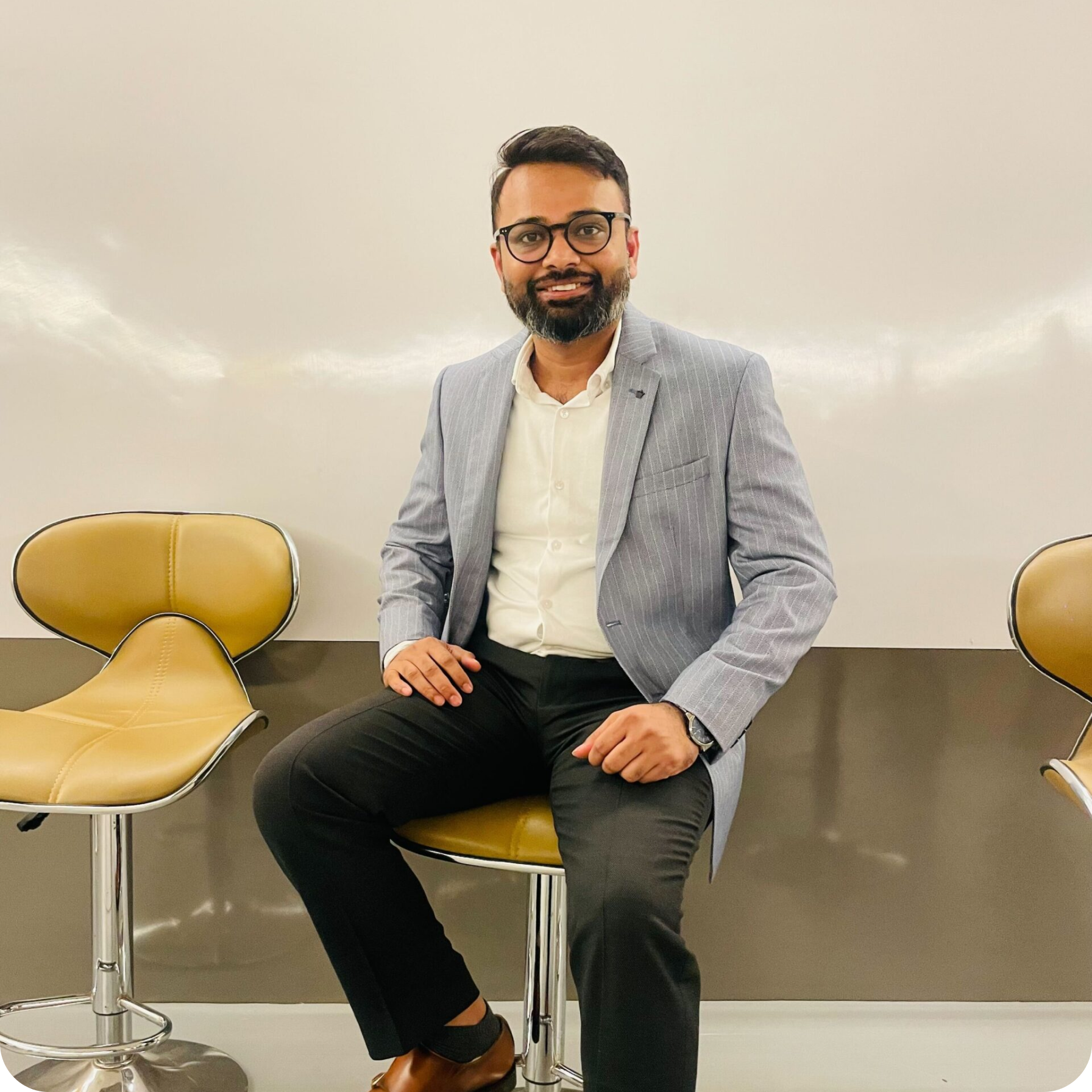
Austin discovered his passion for marketing after graduating from Florida State University in 2010 and building lead-generation websites in the real estate industry.
He later joined a large South Florida digital agency focused on search engine optimization, sharpening his ability to drive measurable growth for clients.
As he rose through the agency ranks, Austin mastered media buying on Google and Facebook and recognized early that attention was shifting to social platforms.
Today, he uses that expertise in attention capture and performance marketing to help businesses scale predictably with data-driven digital strategies.
Rakesh Reddy discovered his passion for marketing while pursuing his MBA at Lynn University, which led to a pivotal internship at Allergan and early experience in healthcare-focused marketing.
In 2019, he teamed up with Austin to launch Orange Carrot Media, and since then has focused on building performance-driven systems that help medical practices grow through digital.
From 2019 to 2025, Rakesh has led operations and delivery, speaking at healthcare and MSME events while scaling Orange Carrot Media’s presence across the U.S. and India.